In 2003, ED awarded $15 million in multi-year, evaluation grants to 9 states, including Arkansas, Iowa, Maine, North Carolina, Pennsylvania, Tennessee, Texas, West Virginia, and Wisconsin. The studies conducted scientifically-based research on how technology impacts student achievement in elementary and secondary education. Final reports were published in 2007.
The North Carolina IMPACT model involves using technology in the teaching of core curricular areas to improve student achievement, utilizing technology coaches and mentors for on-going professional development, as well as learning 21st Century Skills. The program was implemented in several high poverty elementary and middle schools. In the four year study, students in the high need schools that received the IMPACT program have demonstrated that they are 33% more likely to improve one full grade level each year than the control/comparison schools. Student achievement is consistently higher in the IMPACT schools, and teacher retention is 65% higher with this program. College-going rates in Greene County High School, with a modified IMPACT model, increased from 26 to 84% in five years.
The flexible format of online learning gives it the potential to support all levels of student learning. This article was written by Kathleen L. Webb, SETDA member and Principal of the Utah Electronic High School and Utah’s State Educational Technology Coordinator.
Teachers and administrators in Nevada began using a collaborative, online professional development system to facilitate their own 21st century learning. This article was written by Kimberly Vidoni, Shawn Lady, Loretta Asay, and Jacque Ewing-Taylor.
Tech-savvy principals learn to make the web work for them. This article was written by Cathy Higgins, Director of Technology, ConVal School District, New Hampshire and former SETDA member.
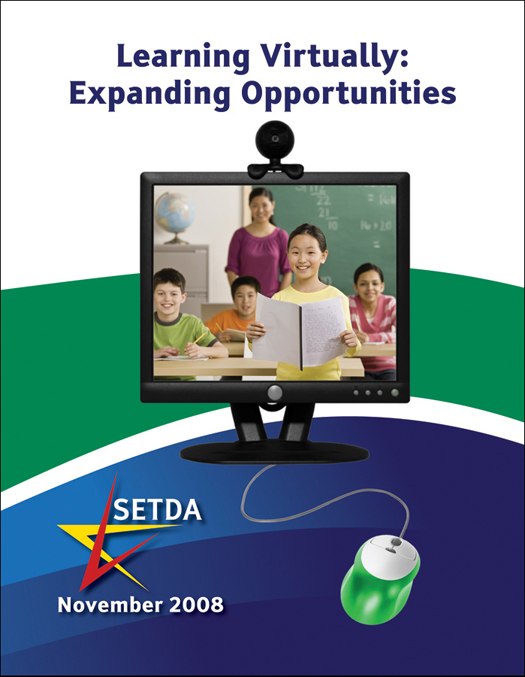
The paper highlights the opportunities offered through virtual learning to provide each student the promise of access to age- and ability appropriate curriculum, rich and extensive resources and accurate and up-to-date assessments regardless of location, economic situation or time. When effectively used, virtual learning allows for student centered, self-directed, self-paced learning that greatly enhances the curriculum offerings schools provide.
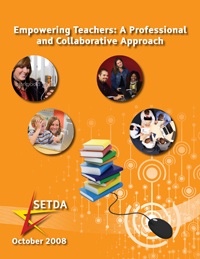
Research shows that professional development changes practice when it is consistent, relevant and sustainable. This paper examines approaches such as technology coaches, curriculum cadres, and collaborative school reform teams that have proven to effectively change teacher behavior and increasing student achievement.
This report addresses the need to provide all children with an education that includes a solid foundation of rigorous science, technology, engineering, and mathematics (STEM) instruction. The need is evident, yet the barriers are vast – recruiting and retaining highly qualified teachers with STEM backgrounds; school policies around credits and curriculum; student, teacher, and parent attitudes; time constraints; and lack of funding and/or leadership to infuse STEM approaches into the current system.
SETDA’s Class of 2020: Action Plan for Education Project includes the development of the five publications listed below designed to create a succinct message addressing technology’s transformative role in education in the hopes of informing future education and workforce development policy at the state and federal levels.
State Education Policy Center (SEPC) is a database of state policies related to education and technology curated by the State Educational Technology Directors Association (SETDA). Find links to SEPC listings for each state within our membership listings here on SETDA.org, or visit SEPC to browse policy across the US.